Modern hotel operations demand both efficiency and security. For operational managers and IT teams, transitioning from standalone locks to an integrated Hotel Door Lock system can be transformative. With the rise of smart hotels, having a connected lock system not only secures guest rooms but also streamlines staff workflows, simplifies audit management, and provides seamless integration with other hotel management systems. Zhongshan Xiangfeng Intelligent Technology Co., Ltd., through its UIELOCK brand, offers advanced smart locks designed to meet these evolving hospitality needs, enabling hotels to provide a safer and more convenient experience for guests while reducing operational complexities.
What Does an Integrated Lock System Really Mean for Hotels?
An integrated lock system is far more than a traditional key or even a standalone RFID lock. It is a fully connected solution where the Hotel Door Lock communicates with controllers, management software, and the broader hotel ecosystem. The goal is to centralize operations, making it possible for staff to manage access, monitor activity, and control multiple properties from a single interface.
In practical terms, integration means that guest check-ins, room assignments, and access credentials can be automatically managed by the hotel's Property Management System (PMS). Housekeeping schedules, security alerts, and energy management can also be synchronized in real time. This approach reduces administrative workload, prevents errors, and creates a unified, secure operational framework.
Integrated systems are especially valuable for hotels facing high occupancy or managing multiple properties. The result is smoother guest experiences, better staff efficiency, and comprehensive operational visibility.
Key Components: Locks, Controllers, Software, Credentials, and Back-Office Integration
A robust integrated lock system consists of several critical components, each playing a unique role in overall hotel operations:
Lock Hardware
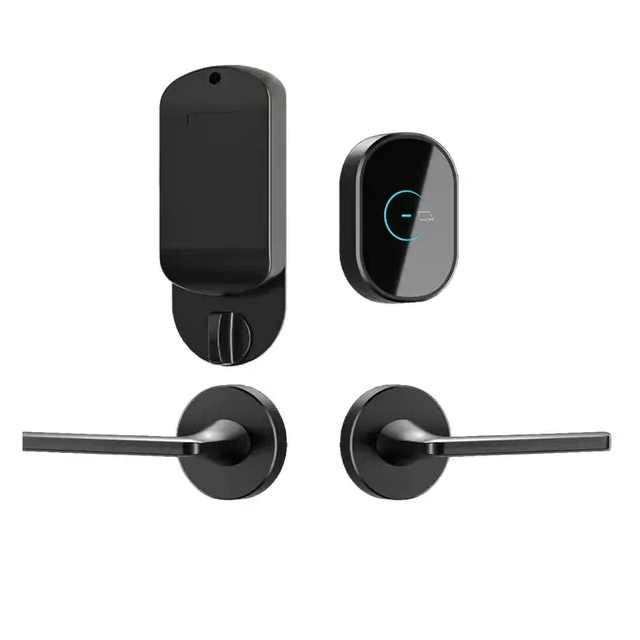
Modern Hotel Door Locks feature RFID card technology, keyless entry options, and electronic access capabilities. These locks are engineered for durability, tamper resistance, and ease of use, ensuring guests experience seamless access while hotel staff can quickly update permissions without physically changing locks.
Controllers
Controllers act as the communication hub between the locks and the management software. They translate commands and collect data to enable monitoring, reporting, and automated updates. Common types include wireless gateways, floor controllers, and offline bridges, each catering to different property layouts and connectivity requirements.
Management Software
The software component can be deployed in the cloud or on-premises. Cloud-based solutions allow remote access and centralized control for multi-property chains, while on-premises solutions provide local control with minimal dependency on internet connectivity. Both solutions enable integration with PMS, CRM, and energy management systems.
Credentials
RFID key cards, mobile keys, and key fobs are typical credentials. These can be programmed to expire automatically, restrict access by time or location, and allow temporary permissions for housekeeping or maintenance teams.
Back-Office Integration
Seamless integration with PMS and other hotel systems ensures that guest information, billing, and operational workflows are synchronized. This eliminates manual updates, reduces human error, and allows hotel staff to focus on guest satisfaction rather than administrative tasks.
Cloud vs. On-Premises Management Software
Choosing between cloud and on-premises software depends on the property’s size, IT infrastructure, and operational goals. Cloud solutions provide flexibility, remote monitoring, and real-time data analysis, which is ideal for hotel chains or multi-location properties. On-premises systems give hotels full control over data, often preferred by boutique or privacy-focused properties.
Controller Types: Wireless Gateways, Floor Controllers, Offline Bridges
Wireless gateways connect multiple locks to a central network, enabling real-time updates. Floor controllers manage locks on a specific floor and can operate independently if the main network fails. Offline bridges act as intermediaries, storing access logs locally and synchronizing with central systems periodically, ensuring no disruption in operations.
Real Operational Benefits
Integrated Hotel Door Lock systems provide tangible benefits across multiple aspects of hotel operations:
Housekeeping Workflows: Staff can receive automated notifications when rooms are vacant and ready for cleaning. Key cards can temporarily unlock rooms for housekeeping staff without requiring managerial intervention.
Audit Trails: Every entry and exit is logged, creating detailed reports for security and compliance. This is particularly important for chain hotels and properties with high turnover.
Access Control: Permissions can be dynamically adjusted for guests, staff, and contractors. Expired or lost credentials can be deactivated instantly, minimizing security risks.
Emergency Management: Centralized monitoring ensures that hotel staff can respond promptly to alerts, reducing potential security or safety incidents.
These operational improvements enhance staff productivity, reduce errors, and contribute to guest satisfaction.
Integration with PMS and Other Hotel Systems
Integrated systems extend beyond locks and controllers. A hotel door lock hotel system can interface with PMS, CRM, billing, and energy management platforms. This integration allows for automated workflows, including:
Assigning room keys at check-in
Updating guest profiles in the CRM system
Triggering billing for minibar or additional services
Adjusting room energy settings when guests check in or out
Typical API/Data Flows and Time-Saving Automations
Data flows are usually handled through secure APIs. For example, when a guest checks in via PMS, a new key card or mobile key is automatically generated and activated. Housekeeping staff receive notifications based on occupancy data, and energy management systems can adjust climate control settings. These automated processes reduce manual tasks, speed up room turnover, and improve operational efficiency.
Deployment Scenarios by Property Size
Different hotel types benefit from integrated lock systems in unique ways:
Boutique Hotels: Smaller properties can benefit from cloud-based management for convenience, while maintaining a high level of personalized guest service.
Midscale Hotels: Integration allows centralized monitoring and reporting while supporting multiple floors or buildings.
Large Chains: Centralized cloud solutions with full PMS, CRM, and energy management integration ensure consistent operational standards across multiple properties.
Phased Rollout Plan Sample for a 120-Room Hotel
A phased rollout may include:
Installing electronic locks in unoccupied rooms first
Integrating floor controllers and backend software
Training staff on using management interfaces
Gradually activating the system property-wide
Continuous monitoring and optimization
This staged approach minimizes disruption to daily operations while ensuring staff adapt efficiently.
Measuring Success: KPIs to Track
To evaluate the effectiveness of an integrated system, hotels should monitor:
Downtime: The amount of time locks or systems are unavailable
Staff Time Saved: Reduction in administrative or manual key distribution tasks
Guest Satisfaction (NPS): Correlation between smooth check-in/check-out and guest feedback
Security Incidents: Reduction in unauthorized access or lost key events
These KPIs provide actionable insights for operational improvement and ROI assessment.
Product Differentiation to Highlight
When promoting an integrated lock system, emphasizing the following differentiators can help position products effectively:
Ease of Integration: Simple setup with existing PMS and hotel systems
SDKs and API Support: Allow custom applications or third-party integrations
Local Service Network: Ensures prompt maintenance and support
Robust Hardware: Reliable, tamper-resistant locks built for high-use hospitality environments
These factors ensure hotels adopt solutions that deliver immediate operational benefits.
Conclusion
For hotels looking to modernize operations, adopting an RFID Card Lock or electronic Hotel Door Lock with CARD can revolutionize workflows, enhance security, and improve guest satisfaction. UIELOCK by Zhongshan Xiangfeng Intelligent Technology Co., Ltd. provides reliable and scalable solutions tailored to diverse hotel types. By piloting a small-scale implementation, properties can evaluate operational gains, integrate seamlessly with existing systems, and scale gradually across the property. For more information on our Key card hotel door lock and electronic lock solutions, contact us to explore the best options for your hotel.
FAQ
Q1: What is the difference between a standalone hotel lock and an integrated lock system?
A1: Standalone locks operate independently and require manual updates, while an integrated system connects locks to PMS, CRM, and energy management platforms for centralized management and automation.
Q2: Can mobile keys work with UIELOCK systems?
A2: Yes, UIELOCK supports mobile credentials alongside RFID cards, enabling flexible guest access options and enhanced convenience.
Q3: How does integration with PMS improve hotel operations?
A3: Integration automates room assignments, key activation, billing, and housekeeping notifications, significantly reducing manual tasks and operational errors.
Q4: Is cloud management suitable for all hotel sizes?
A4: Cloud management is ideal for multi-property or large hotels for centralized control, while on-premises solutions may suit smaller or boutique properties with privacy concerns.


