Ensuring both guest security and operational efficiency is a top priority for modern hotels. Traditional mechanical keys have long been the standard, but they come with significant limitations, including the risk of loss, theft, and cumbersome management. Over the past decade, smart access control solutions have revolutionized the hospitality industry, providing hotels with the ability to streamline operations while enhancing the guest experience. Among these solutions, RFID technology stands out as a particularly effective and flexible option. By adopting an RFID-enabled Hotel Door Lock, hotels can deliver a modern, seamless, and secure entry experience for guests while optimizing internal operations.
Quick Overview: What RFID Access Means for Hotels
Radio Frequency Identification (RFID) has transformed the way hotels manage room access. Unlike traditional keys, which are physical objects that can be lost or copied, RFID credentials communicate with a lock using electromagnetic fields. When a valid credential is presented, the lock grants access and logs the event for security and operational oversight. This simple yet powerful mechanism allows hotels to automate access, reduce human errors, and provide guests with an experience that feels both modern and secure.
For hotel operators, installing RFID-enabled Hotel Door Lock systems brings numerous operational advantages. Check-in can be accelerated, as guests may receive their credentials before arrival or via mobile devices, reducing front desk queues. Staff workload is minimized, as temporary or restricted access for housekeeping, maintenance, or event personnel can be programmed remotely. The integration with PMS ensures that room assignments, access logs, and guest profiles are managed automatically. Additionally, RFID systems support multiple credential types—cards, wristbands, or mobile tokens—offering flexibility for a variety of guest segments, from business travelers to resort vacationers.
How RFID Works: Hardware and Credential Types
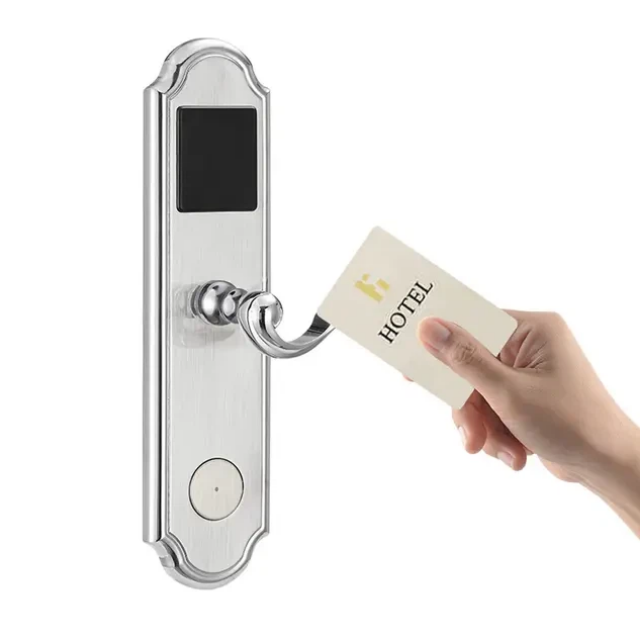
An RFID hotel lock system typically consists of three key components: the lock hardware, the credential, and the access management software. The lock hardware incorporates an RFID reader, secure control mechanisms, and mechanical components designed to withstand heavy use and potential tampering. These locks are built to meet the rigorous demands of daily hotel operations while offering aesthetic appeal that complements modern interior designs.
The second component is the credential, which can be a card, wristband, or smartphone token. Each credential carries encrypted data that identifies the guest and their authorized access points. The credential communicates wirelessly with the lock when brought within range. The third component is the management software, which enables staff to program access, monitor usage, generate reports, and integrate with the hotel’s PMS. Depending on the system, the locks may operate online in real-time or offline with periodic synchronization.
Low-Frequency vs. High-Frequency (LF vs. HF/MIFARE)
RFID credentials operate on different frequency bands, which influence performance and security. Low-frequency (LF) systems, operating at 125 kHz, are typically simpler and less expensive but have shorter read ranges and lower data capacity. These systems are suitable for basic access control, such as guest rooms with minimal additional permissions.
High-frequency (HF) systems, usually at 13.56 MHz and based on the MIFARE standard, are more advanced. They support faster read times, larger data storage, and robust encryption, making them ideal for mid-sized and larger hotels. HF/MIFARE credentials can also accommodate additional functionality, such as linking to loyalty programs, granting access to multiple areas within the property, or integrating with mobile apps. Hotels seeking long-term security, operational flexibility, and future-proofing typically opt for HF/MIFARE solutions.
RFID Cards vs. RFID Wristbands vs. Mobile RFID Tokens
Hotels have several options for delivering RFID credentials to guests.
RFID Cards are the most common, offering durability, low cost, and easy replacement. They can be programmed for specific room access, time limitations, or multiple rooms. Cards are ideal for standard hotel operations where simplicity and reliability are priorities.
RFID Wristbands are increasingly popular in resorts, wellness hotels, and all-inclusive properties. Beyond granting room access, wristbands can control entry to facilities like pools, gyms, or event venues. This multi-functional credential reduces the need for multiple access devices and simplifies guest interactions.
Mobile RFID Tokens allow guests to unlock doors using their smartphones via secure NFC or BLE technologies. Mobile keys integrate seamlessly with hotel apps, enabling check-in, room access, service requests, and loyalty program participation. They provide a fully contactless, high-tech solution that aligns with current guest preferences and hygiene standards.
Providing multiple credential options enables hotels to cater to diverse guest needs while maintaining strong security and operational efficiency.
Top Benefits for Guests and Staff
Implementing RFID-enabled Hotel Door Lock systems offers extensive advantages for both hotel guests and operational staff.
Enhanced Security is a primary benefit. RFID credentials are encrypted and can be deactivated instantly if lost or stolen. Unlike traditional keys, they are difficult to duplicate, and audit logs allow staff to track who accessed each room and when. This level of control helps mitigate security risks and enhances overall guest confidence.
Faster Check-In is another critical advantage. Guests can receive their room credentials digitally before arrival or at express check-in kiosks, reducing front desk wait times. VIP guests or frequent travelers may enjoy pre-programmed mobile keys for instant access, contributing to a seamless and personalized experience.
Touchless Operation is increasingly important in post-pandemic hospitality. RFID credentials enable contactless entry, reducing physical interaction with door handles and contributing to hygiene and guest safety. This aligns with traveler expectations for cleanliness and modern convenience.
Operational Efficiency benefits hotel staff as well. Housekeeping, maintenance, and event personnel can receive temporary access credentials without issuing physical keys. PMS integration automates programming and reporting, freeing staff to focus on higher-value services such as guest engagement and personalized support.
Guest Satisfaction naturally improves as a result. A smooth, high-tech entry experience reflects positively on the hotel’s brand, encouraging repeat visits and positive online reviews. Guests perceive RFID-enabled access as a sign of innovation and professionalism, enhancing their overall experience.
Common Implementation Models and Integrations
Offline Locks vs. Online/Networked Locks
Hotels can deploy RFID locks in different modes depending on operational needs and budget.
Offline Locks operate independently and store access permissions locally. They are simple to install and cost-effective, but any changes to access rights must be updated manually. Offline locks are suitable for smaller properties, secondary rooms, or areas with limited access requirements.
Online/Networked Locks are connected to a central management system via Wi-Fi or LAN. These locks allow real-time updates to access permissions, remote monitoring, and automated reporting. Networked systems can immediately revoke access, monitor guest and staff movements, and integrate with mobile credentials for a fully modernized experience. Hotels often adopt a hybrid strategy, deploying networked locks in premium areas while offline locks cover less critical zones.
PMS / Property Management System Integration
Integrating RFID locks with a hotel’s PMS is essential for maximizing efficiency. PMS integration enables automated check-in, allowing guests to receive room credentials directly from the system without waiting at reception. Access logs and activity reports can be analyzed for operational insights, including room occupancy patterns, housekeeping efficiency, and guest behavior trends. Integration also allows linking access credentials to loyalty programs, VIP tiers, and personalized guest experiences.
The Hotel Door Lock from UIELOCK is designed for seamless PMS integration, supporting a range of hotel management platforms. This ensures that hotels can implement a modern access control system without major disruptions to existing operational workflows.
Security Concerns & Real-World Vulnerabilities
Although RFID locks are generally more secure than traditional keys, operators must be aware of potential vulnerabilities.
Data Interception can occur if communication between the credential and lock is unencrypted. Using HF/MIFARE credentials with strong encryption mitigates this risk.
Card Cloning remains a concern, especially with older LF systems. Hotels should ensure regular updates to firmware and adopt encryption standards that prevent unauthorized duplication.
Physical Tampering can compromise security if locks are installed incorrectly or damaged. Regular inspections, maintenance, and adherence to installation best practices reduce this risk.
System Integration Vulnerabilities can arise in networked locks. Secure communication protocols, firewalls, and periodic audits are necessary to prevent unauthorized remote access.
Industry Incidents and Mitigation
Hotels have occasionally experienced unauthorized access due to weak encryption or outdated firmware. Mitigation strategies include regular firmware updates, strict access policies, layered security measures, and staff training on emergency protocols. By proactively addressing security concerns, hotels can ensure that adopting RFID systems enhances safety without introducing new risks.
Cost Considerations and ROI for Mid-Sized Hotels
Implementing an RFID system requires investment in hardware, credentials, software, and staff training. Initial installation costs vary depending on lock type, quantity, and integration complexity. Ongoing costs include credential replacement, battery maintenance, software support, and occasional lock servicing.
Despite these costs, hotels often achieve significant ROI through operational efficiencies, including faster check-ins, reduced lost key incidents, and automated access management. Additionally, enhanced guest satisfaction and the ability to market high-tech amenities can increase repeat bookings and revenue. Mid-sized hotels typically observe a positive ROI within two to three years, particularly when factoring in both cost savings and increased revenue potential.
How an RFID Upgrade Can Increase Direct Bookings and Guest Satisfaction
RFID-enabled access systems can serve as a marketing advantage. Guests increasingly expect contactless and high-tech experiences. Highlighting RFID access on booking websites, social media, and promotional materials can attract tech-savvy travelers and emphasize the hotel’s commitment to safety, convenience, and modern amenities.
Operationally, RFID reduces front desk congestion, allowing staff to provide more personalized services. Integrated credentials can extend beyond room access to amenities such as spas, gyms, and exclusive events, improving the guest experience and simplifying operations. These enhancements contribute to higher satisfaction scores, positive reviews, and stronger loyalty, ultimately driving more direct bookings.
Conclusion
Hotels seeking a balance of security, efficiency, and guest convenience should consider upgrading to an RFID-enabled Hotel Door Lock system. Zhongshan Xiangfeng Intelligent Technology Co., Ltd. offers robust, easy-to-use locks compatible with a wide range of PMS platforms. Whether through RFID cards, wristbands, or mobile credentials, these systems provide a future-ready solution for modern hospitality operations. Hotels can start with pilot deployments in select rooms or wings, assess operational benefits and guest feedback, and then scale gradually. For more information or to experience our products firsthand, contact us.
FAQ
Q1: What is the difference between LF and HF RFID locks?
LF operates at 125 kHz with limited range and storage, suitable for basic access control. HF (MIFARE) at 13.56 MHz supports faster reads, larger data storage, and stronger encryption for modern hotel requirements.
Q2: Can RFID locks integrate with PMS systems?
Yes, locks from UIELOCK are designed for seamless PMS integration, enabling automated check-in, access programming, and reporting.
Q3: Are mobile RFID keys secure for hotel rooms?
When implemented with encrypted NFC or BLE technology, mobile keys provide a secure, contactless entry solution that integrates with hotel apps.
Q4: How often do key cards need replacement?
Cards are durable for months or years, depending on usage. Hotels can manage card lifecycle costs as part of routine maintenance.


