With the increasing need for convenient and secure solutions in urban mobility and personal security, smart and keyless lock technologies have become more popular than ever. Among these innovations, Fingerprint U Locks and Bluetooth-enabled locks are leading the way, offering alternatives to traditional keys and combination locks.
Fingerprint U Locks use biometric fingerprint recognition to provide fast, personalized access, while Bluetooth locks rely on smartphone apps and wireless connectivity for unlocking. Both types promise enhanced security and ease of use, but they operate differently and offer distinct advantages.
The purpose of this article is to compare Fingerprint U Locks and Bluetooth locks, helping readers determine which option is best for everyday use. By examining factors such as security, convenience, durability, and cost, users can make an informed decision that matches their lifestyle and mobility needs.
Technology Overview
1.Fingerprint U Lock
Fingerprint U Locks rely on biometric authentication to grant access. Users simply place a registered finger on the sensor, and the lock instantly verifies their identity. This system operates independently, without the need for smartphones, apps, or internet connectivity, making it highly reliable for everyday use.
2.Bluetooth Lock
Bluetooth locks use a smartphone app or Bluetooth signal to unlock the device. They often integrate with smart home systems or cloud-based access control, allowing remote management and user sharing. While convenient and feature-rich, these locks depend on the phone’s battery, connectivity, and app functionality, which can affect accessibility in certain situations.
By understanding these technological differences, users can better evaluate which lock type aligns with their needs for security, convenience, and independence.
Security Comparison
1.Vulnerability Analysis
Fingerprint U Locks rely on biometric authentication, making them highly secure against unauthorized access. While no system is entirely foolproof, spoofing fingerprints is difficult compared to hacking a Bluetooth lock, which can be vulnerable to app exploits or wireless interception if not properly encrypted.
2.Physical Protection
The U-shaped frame of a fingerprint lock is designed for robust physical security. It resists common attacks such as cutting, prying, or brute-force attempts, providing an extra layer of protection beyond electronic authentication. Bluetooth locks vary in build quality, and some may be less resistant to mechanical attacks depending on the design.
3.Data Protection
Fingerprint U Locks store biometric information in encrypted form within the device, ensuring privacy and minimizing the risk of data theft. In contrast, Bluetooth locks rely on app-based encryption, and if a paired smartphone is lost, stolen, or compromised, the lock’s security could be affected.
By comparing these aspects, Fingerprint U Locks generally offer more consistent and independent security, while Bluetooth locks provide flexibility but may require extra caution regarding digital vulnerabilities and device dependency.
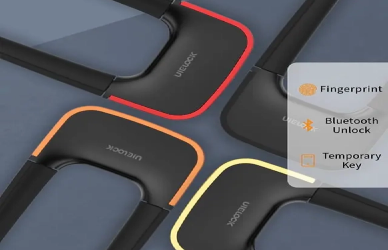
Convenience and Usability
1.Unlocking Speed and Ease of Use
Fingerprint U Locks provide instant access, typically unlocking in under one second. Users simply place a registered finger on the sensor, making it faster and more intuitive than entering a code or using a smartphone app. This speed is especially valuable for daily commuters and urban mobility users.
2.Multi-User Access
Fingerprint locks allow multiple fingerprints to be registered, enabling shared use among family members, coworkers, or roommates. Bluetooth locks also support multi-user access, but it requires app installation, permissions management, and sometimes cloud connectivity, which can be less straightforward in practice.
3.Independence from External Devices
Fingerprint U Locks operate standalone, with no dependence on smartphones, apps, or internet connectivity. In contrast, Bluetooth locks rely on smartphone battery life and signal strength, which can limit accessibility if the phone is dead, lost, or offline.
4.Offline Accessibility
A key advantage of Fingerprint U Locks is full offline functionality. Users can unlock their belongings anytime without relying on external networks, ensuring reliable access in all conditions, unlike Bluetooth locks that may fail in low-signal or no-signal environments.
By combining fast unlocking, multi-user support, and independence from devices, Fingerprint U Locks offer practical and convenient security for everyday urban life.
Maintenance and Durability
1.Battery and Charging Requirements
Fingerprint U Locks are powered by rechargeable batteries that typically last for several months on a single charge, depending on usage frequency. Regular monitoring of battery levels and timely charging ensures uninterrupted functionality. Bluetooth locks also rely on batteries, but their dependence on smartphones may create additional complications if the app or phone battery fails.
2.Resistance to Weather Conditions
Both lock types must withstand environmental challenges, but Fingerprint U Locks are often designed to be waterproof, dustproof, and resistant to extreme temperatures, making them suitable for outdoor use on bicycles, scooters, and gates. Bluetooth locks vary in durability, and some models may be less robust against rain, dust, or freezing conditions, which can affect performance.
3.Longevity and Replacement Cycles
Fingerprint U Locks are constructed with high-strength materials and reliable electronics, offering long-lasting performance with minimal maintenance. Replacement cycles are typically longer than standard mechanical locks. Bluetooth locks may have shorter lifespans due to app dependency, battery limitations, or exposure to environmental stressors.
By prioritizing battery management, environmental resistance, and robust construction, Fingerprint U Locks provide durable, low-maintenance security solutions for both indoor and outdoor applications.
Cost and Value
1.Initial Cost Differences
Fingerprint U Locks generally have a higher upfront cost compared to standard Bluetooth locks due to their biometric sensors and robust construction. However, this investment reflects the advanced technology and added convenience they provide. Bluetooth locks may be less expensive initially, but they often rely on smartphones and apps, which can introduce additional indirect costs.
2.Long-Term Value
The long-term benefits of Fingerprint U Locks include reliable, keyless access, reduced risk of lost keys or forgotten codes, and consistent security over time. Users save both time and effort, especially in daily commuting or shared-use scenarios. Bluetooth locks offer convenience but can be impacted by battery failures, app issues, or connectivity problems, potentially reducing their long-term value.
3.Cost-Benefit Analysis for Different Users
For frequent commuters, urban dwellers, and shared users, Fingerprint U Locks often provide the best balance between convenience and security. While the initial investment is higher, the time saved, reduced stress, and enhanced protection make them a worthwhile choice. Bluetooth locks may suit tech-savvy users seeking app integration or smart-home connectivity, but they may require more attention to maintenance and device management.
By evaluating initial cost versus long-term benefits, users can make an informed decision that aligns with their security needs, lifestyle, and budget.
Emerging Trends and Future Considerations
1.Integration of Hybrid Locks
The future of keyless security is moving toward hybrid solutions that combine biometric fingerprint recognition with Bluetooth connectivity. Such locks offer the best of both worlds: the reliability and independence of fingerprint authentication, along with the remote management and smart features provided by Bluetooth.
2.Smart City and IoT Adoption
As smart cities and IoT technologies become more prevalent, security devices are increasingly expected to integrate with apps, cloud services, and other connected systems. Fingerprint U Locks may evolve to provide real-time monitoring, remote access control, and data analytics, catering to urban mobility and shared infrastructure.
3.Potential Improvements
Future generations of Fingerprint U Locks may see enhancements in battery efficiency, allowing longer use between charges. Advanced encryption will further protect biometric data, and improved user interfaces will simplify setup, multi-user management, and daily operation. These innovations aim to make Fingerprint U Locks even more convenient, secure, and user-friendly.
By keeping an eye on these trends, consumers can choose locks that are future-proof and adaptable to evolving security needs and technological advancements.
Conclusion
When comparing Fingerprint U Locks and Bluetooth locks, each offers distinct advantages and limitations. Fingerprint U Locks provide instant, keyless access, robust physical security, and independence from external devices, making them ideal for users who prioritize speed, reliability, and multi-user convenience. Bluetooth locks offer smartphone integration, remote access, and app-based features, appealing to tech-savvy users or those seeking connected solutions.
Ultimately, the best choice depends on individual needs. Users should evaluate whether they value independence from external devices, unlocking speed, multi-user functionality, or integration with apps. Other important factors include security level, convenience, environmental durability, and long-term cost.
By considering these aspects carefully, readers can select a lock that provides maximum convenience, protection, and peace of mind for everyday use, ensuring their belongings remain secure in a variety of urban and personal settings.


