Turning a small key inside a cabinet lock may feel simple, but that tiny rotation sets several internal parts into motion. A flat metal cam shifts position, a latch engages, pressure transfers to the cabinet frame, and suddenly a drawer that was freely sliding is firmly secured. Understanding how a cabinet lock works helps avoid installation mistakes, reduces long-term wear, and ensures that storage security performs exactly as expected. This article explains the cabinet lock mechanism in clear terms: its components, the movement behind the panel, common performance problems, and how to prevent them.
Zhongshan Xiangfeng Intelligent Technology Co., Ltd., operating under the UIELOCK brand, manufactures smart and mechanical locking systems with annual production capacity exceeding one million sets. From traditional cam locks to smart cabinet locks integrated with digital access control, UIELOCK applies mechanical precision and intelligent technology to cabinet-scale security solutions.
The Basic Parts You’ll See in Many Cabinet Locks
To understand how a cabinet lock works, it is helpful to first identify its core components. Although designs vary, most mechanical cabinet locks share several essential parts.
Cylinder or Core: Where the Key Engages
The cylinder is the visible part where the key is inserted. Inside the cylinder are precision components that align when the correct key is used. When alignment occurs, the cylinder can rotate.
This rotation is the starting point of the cabinet lock mechanism. Without proper alignment, the cylinder remains fixed and the cam or latch does not move. In keyless cabinet locks, this cylinder may be replaced by an electronic actuator, but the mechanical principle remains similar: an input triggers controlled movement.
Cylinder quality directly affects durability and smooth operation. Poorly manufactured cylinders may cause sticking, uneven rotation, or premature wear.
Cam, Bolt, or Latch: The Part That Blocks Opening
The cam is a flat metal arm attached to the rear of the cylinder. When the key turns, the cam rotates behind the cabinet panel. In the locked position, the cam blocks the cabinet frame or strike plate. In the unlocked position, it clears the obstruction.
In some cabinet lock designs, especially higher-security models, a bolt or latch replaces the flat cam. Instead of simply rotating, the latch may extend into a strike plate for stronger engagement.
The cam length and shape must match the cabinet thickness and door structure. Incorrect sizing can prevent proper locking.
Housing, Nut, Plate, and Strike Area
The housing holds the cylinder securely within the cabinet panel. A threaded body and mounting nut fix the lock in place.
Behind the door or drawer, the strike area is where the cam catches. This interaction between cam and strike plate creates the physical barrier that prevents opening.
If any of these components are misaligned, the cabinet lock may feel loose, stiff, or unreliable.
Step-by-Step: What Happens When You Turn the Key?
Understanding the motion sequence clarifies how simple mechanical rotation secures a drawer.
Rotation Degrees and Why They Matter
Most cam locks operate with 90-degree or 180-degree rotation. The rotation angle determines how far the cam swings behind the panel.
A 90-degree rotation may be sufficient for narrow strike engagement. A 180-degree rotation provides wider movement and may improve clearance in certain cabinet structures.
The rotation degree must match cabinet design. Too little rotation may prevent full locking. Excess rotation may interfere with internal components.
Locked vs Unlocked Position
In the unlocked position, the cam is aligned so it does not obstruct the frame. The door or drawer can open freely.
When the key turns to the locked position, the cam rotates behind the frame and blocks movement. The key can then be removed, leaving the cam in a fixed orientation.
The entire cabinet lock mechanism relies on precise alignment between the cam and strike area. Even small measurement errors can compromise performance.
Keyed vs Keyless: What Changes Mechanically?
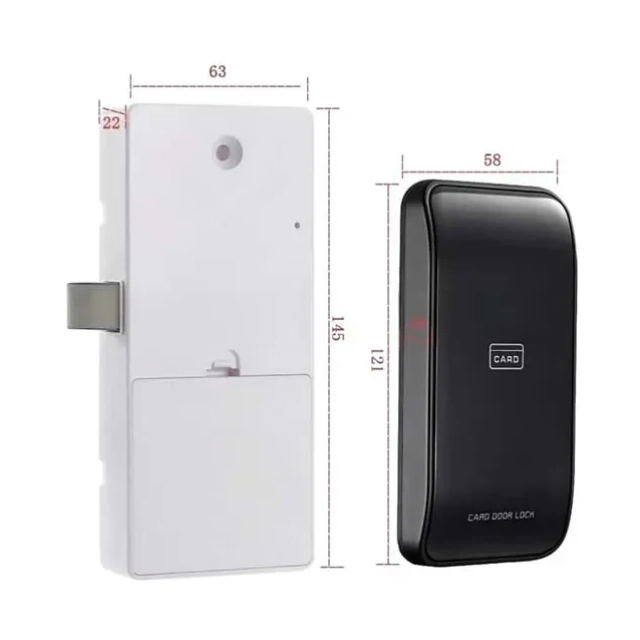
In keyed systems, the physical key aligns internal pins or discs inside the cylinder. In keyless cabinet lock systems, an electronic signal triggers a motor or actuator that rotates the cam.
Mechanically, the blocking principle remains the same: a component rotates or extends to prevent movement. The difference lies in the activation method.
UIELOCK integrates digital technology into cabinet-scale locking systems while maintaining stable mechanical foundations. Even smart cabinet locks ultimately depend on precise internal movement to secure storage.
Why Do Some Cabinet Locks “Feel Bad”?
Users often describe cabinet locks as stiff, loose, or unreliable. In most cases, the issue is not the basic mechanism but installation or sizing.
Misalignment Between Door and Frame
If the cabinet door does not close flush against the frame, the cam may not engage correctly. This can cause:
Difficulty turning the key
Partial locking
Excessive pressure on the cylinder
Misalignment is common in wooden cabinets that shift slightly over time.
Incorrect Cam Length
Cam length must correspond to door thickness and clearance space. A cam that is too short may fail to catch. A cam that is too long may collide with internal surfaces.
Correct cam selection ensures smooth engagement without excessive force.
Over-Tightening the Mounting Nut
Over-tightening the mounting nut can compress the cabinet panel and distort the cylinder alignment. This creates friction, making the key hard to turn.
Balanced tightening secures the lock without restricting rotation.
What to Check Before Installation
Preventing problems begins before the cabinet lock is even mounted.
Panel Thickness and Internal Clearance
Measure cabinet panel thickness accurately. Ensure sufficient space behind the panel for cam rotation.
Clearance must allow full rotation without interference from internal shelves or supports.
Cam Direction and Strike Position
Cam orientation must match door swing direction. Left-opening and right-opening doors may require different cam positions.
Check that the strike area is positioned precisely where the cam will rotate. Even a few millimeters of misplacement can prevent secure engagement.
Test Before Final Tightening
After inserting the lock but before fully tightening the nut:
Insert the key
Rotate through full lock and unlock cycles
Confirm smooth operation
Verify that the cam blocks and releases correctly
Testing before final tightening reduces later adjustments.
UIELOCK designs cabinet locks with practical installation adaptability, supporting diverse cabinet structures and user requirements.
Symptom to Solution Overview
Below is a quick-reference table to help identify common issues.
Symptom | Likely Cause | What to Check First |
Key turns but door still opens | Cam not catching | Strike plate position or cam orientation |
Key is hard to turn | Binding or misalignment | Mounting nut tightness and panel alignment |
Door will not close fully | Clearance issue | Cam length and internal obstructions |
Lock works inconsistently | Loose mounting | Retighten and retest rotation cycles |
This overview highlights that most cabinet lock problems stem from alignment or sizing rather than complex mechanical failure.
How Mechanical Precision Builds Trust
A cabinet lock is not complex compared to large door locking systems. Its mechanism is straightforward: rotation, engagement, obstruction.
However, simplicity does not mean low importance. Precise manufacturing ensures:
Smooth cylinder rotation
Accurate cam positioning
Durable material performance
Consistent locking cycles
Zhongshan Xiangfeng Intelligent Technology Co., Ltd. applies large-scale smart lock manufacturing expertise to cabinet lock production. As one of China’s earliest smart lock manufacturers, the company combines mechanical accuracy with intelligent system integration, offering both traditional cam locks and advanced smart cabinet locks.
Understanding how a cabinet lock works empowers buyers to match product structure with cabinet design and usage frequency. Whether for office drawers, tool cabinets, storage enclosures, or smart access-controlled environments, proper installation and correct component selection ensure reliable performance.
Conclusion
The cabinet lock mechanism is straightforward: a cylinder rotates, a cam engages, and a physical barrier blocks movement. Most performance issues arise not from complexity but from measurement errors or alignment problems. Selecting the right design, matching cam length to cabinet thickness, and ensuring precise installation allow the locking system to function smoothly over time. UIELOCK provides a wide range of mechanical and smart cabinet lock options engineered for durability and accurate engagement. Visit and contact us to discuss your project needs. The right furniture locking mechanism ensures secure drawers and cabinets operate exactly as intended.
FAQ
1. How does a cam lock work inside a cabinet lock?
A cam lock works by rotating a flat metal cam behind the cabinet panel. When the key turns, the cam blocks the frame in the locked position and clears it in the unlocked position.
2. Why is my cabinet lock difficult to turn?
A cabinet lock may feel stiff due to misalignment, incorrect cam length, or over-tightening during installation. Checking panel alignment and mounting tension often resolves the issue.
3. What is the difference between a mechanical and keyless cabinet lock mechanism?
A mechanical cabinet lock uses a physical key to rotate internal components. A keyless cabinet lock uses electronic input such as a code or RFID to activate the internal rotation.
4. Can installation affect how a cabinet lock works?
Yes. Accurate measurement of panel thickness, proper cam orientation, and correct strike positioning directly affect how a cabinet lock functions and how smoothly it operates.


