A drawer that should stay private, a filing cabinet holding signed contracts, a storeroom cabinet shared by several staff members—these are everyday situations where a cabinet lock becomes more than a small piece of hardware. It defines who can access what, and when. While it may look simple from the outside, a cabinet lock plays a practical role in protecting documents, personal belongings, tools, and even safety-sensitive items. Understanding what a cabinet lock really is—and when you actually need one—helps you avoid under-protecting important assets or overcomplicating your storage security.
A Cabinet Lock Is a Category, Not One Specific Lock
When people search for “what is a cabinet lock,” they often expect a single design. In reality, a cabinet lock is a broad category of locking mechanisms designed specifically for cabinets, drawers, cupboards, storage units, and filing systems. It is not one universal shape or structure, but a family of products adapted to different furniture types and access needs.
What “Cabinet” Covers in Real Applications
The word “cabinet” includes more than kitchen cupboards. In commercial and industrial settings, cabinets refer to:
Office filing cabinets storing confidential documents
Storage cabinets for tools and spare parts
Employee lockers and shared drawer units
Retail display cabinets and backroom storage drawers
Medicine and cleaning supply cabinets
Each of these applications requires a locking solution that fits furniture thickness, door direction, and frequency of use. That is why cabinet locks are designed to integrate directly into panels and drawers rather than mounting like heavy door locks.
At UIELOCK, smart cabinet lock solutions are developed to match various cabinet structures, ensuring compatibility with both traditional office furniture and modern storage systems.
What “Lock” Means in This Context
In the cabinet category, a lock can be:
Keyed mechanical locks
Keyless digital or smart locks
Surface-mounted locks
Hidden internal mechanisms
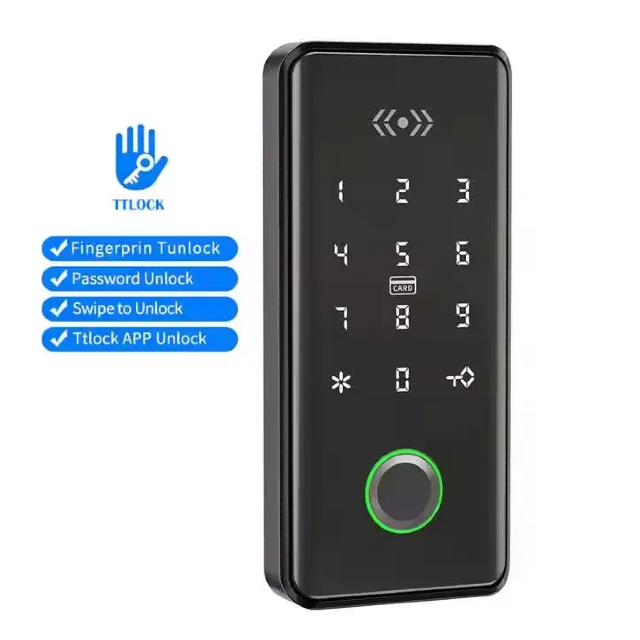
A cabinet lock with key remains one of the most common solutions, especially for filing cabinets and controlled office storage. At the same time, smart cabinet locks are increasingly used in shared environments where access management matters.
The key idea is simple: a cabinet lock is designed to control access to furniture, not to replace heavy-duty building entrance security.
What Problems a Cabinet Lock Solves
Understanding what problems a cabinet lock solves helps determine whether you truly need one. In most cases, the goal is not high-level vault security. The purpose is structured access control.
Privacy and Access Control
In shared offices, drawers and cabinets are often within reach of multiple employees, visitors, cleaning staff, or temporary workers. Without a locking system, there is no boundary.
A cabinet lock ensures that:
Only authorized users can access certain files or items
Access rights remain clear even during staff turnover
Confidential information is not casually viewed
This is especially important for HR documents, financial records, contracts, or intellectual property.
Preventing Casual Tampering
A cabinet lock is not designed to resist professional forced entry. Instead, it deters casual access and opportunistic interference. In many real-world environments, that is exactly what is required.
For example:
Tool cabinets in workshops
Spare parts storage rooms
Back-office supply cabinets
Locking these cabinets reduces the risk of items being moved, borrowed, or misplaced without authorization.
Keeping Cabinets Properly Closed
High-traffic cabinets may not stay securely shut without a locking mechanism. A properly installed cabinet lock adds structural closure, preventing doors from swinging open unintentionally and maintaining alignment in busy environments.
In operational spaces where efficiency matters, even small disruptions can create confusion. A lock helps maintain order.
Where People Commonly Use Cabinet Locks
When deciding whether you need a cabinet lock, reviewing common use scenarios makes the decision clearer.
Office Cabinets and Filing Cabinets
A file cabinet lock is one of the most recognized applications. Companies use cabinet locks to protect:
Employee records
Client contracts
Accounting documents
Legal agreements
Zhongshan Xiangfeng Intelligent Technology Co., Ltd., operating under the brand UIELOCK, manufactures smart cabinet locks that integrate easily into office furniture. As one of China’s earliest smart lock manufacturers with annual production capacity exceeding one million sets, the company provides both mechanical and intelligent locking solutions suitable for professional environments.
Storage Rooms and Tool Cabinets
In warehouses and workshops, cabinets store tools, components, and equipment. Without locks, tracking inventory becomes difficult.
A cabinet lock supports:
Controlled access for maintenance teams
Reduced loss of frequently used tools
Clear responsibility assignment
Retail Display Cabinets and Backroom Drawers
Retail stores often use glass or wooden display cabinets to showcase products. Staff-only access ensures that items are not removed without supervision.
In this context, a cabinet lock provides both security and aesthetic integration, maintaining a clean display appearance while protecting goods.
Cabinet Lock vs Door Lock — What’s Different?
Confusion sometimes arises between cabinet locks and door locks. While both serve security purposes, they are engineered for different expectations.
Discourage Access vs Resist Forced Entry
A door lock is built to resist forced entry at a building level. It must withstand physical pressure, external attack attempts, and environmental exposure.
A cabinet lock, by contrast, is designed primarily to:
Restrict casual access
Provide structured internal access control
Integrate into furniture panels
Understanding this difference prevents unrealistic expectations and ensures the correct application.
Materials and Mounting Differences
Door locks are thicker, more robust, and installed in solid doors. Cabinet locks are:
Compact
Integrated into thin panels
Designed for furniture thickness
Often using cam or latch mechanisms
The installation environment shapes the design.
What to Identify Before You Add a Cabinet Lock
Before installing a cabinet lock, a brief needs assessment ensures that the solution fits the scenario.
What Are You Protecting?
Ask yourself:
Are you protecting documents?
Personal belongings?
Hazardous materials?
Tools or equipment?
Different contents may require different lock strengths or access systems.
Who Needs Access?
Single user
Small team
Public or rotating staff
In shared environments, key management becomes important. Smart cabinet locks may reduce lost key issues and simplify access permissions.
How Often Will It Be Used?
A daily-use drawer requires smooth, durable operation. A rarely opened cabinet may prioritize secure closure over frequent convenience.
Assessing frequency helps choose the right type of cabinet lock without overspending or under-specifying.
Cabinet Lock Use Scenarios and Requirements
Below is a simplified overview to help match needs with typical cabinet lock characteristics.
Scenario |
Typical Access Need |
Lock Direction |
Key Consideration |
Office filing cabinet |
Controlled access |
Keyed or managed keying |
Easy key replacement, document protection |
Shared storage cabinet |
Multi-user access |
Keyed or smart system |
Reduce lost-key friction |
Retail display cabinet |
Staff-only |
Discreet internal lock |
Maintain visual cleanliness |
Home medicine cabinet |
Adult-only access |
Child-safe style |
Prevent unsafe access |
Workshop tool cabinet |
Assigned technician access |
Durable cam mechanism |
Smooth daily operation |
This table highlights that a cabinet lock is not one-size-fits-all. Its effectiveness depends on proper alignment with usage conditions.
Why Cabinet Locks Matter in Modern Workspaces
As work environments evolve, storage systems have multiplied. Hybrid offices, shared desks, coworking spaces, and temporary project teams create dynamic access patterns.
Without a cabinet lock, access control relies entirely on trust and informal processes. With a structured locking solution:
Accountability improves
Privacy is maintained
Internal boundaries are respected
UIELOCK develops smart cabinet lock solutions that address these real operational challenges. Leveraging extensive experience in smart locking systems, including Bluetooth locks, ZigBee apartment locks, and IoT-enabled products, the company applies intelligent security expertise to cabinet applications as well.
When Do You Actually Need a Cabinet Lock?
You need a cabinet lock when:
Items inside the cabinet have value
Access should not be open to everyone
Responsibility must be defined
Storage areas are shared
Privacy matters
You may not need one if:
The cabinet stores non-sensitive, low-value items
Access control is unnecessary
The space is already secured and monitored
The decision is not about over-securing. It is about applying the right level of control to the right storage scenario.
Conclusion
A cabinet lock may be small, but it establishes clear access boundaries in offices, storage rooms, retail environments, and homes. Choosing the right cabinet lock ensures that privacy, organization, and operational efficiency are protected without unnecessary complexity. Zhongshan Xiangfeng Intelligent Technology Co., Ltd., through the UIELOCK brand, offers a wide range of smart and mechanical storage locking solutions designed for different cabinet applications. If you are evaluating your storage security needs, explore the cabinet locking solutions and contact us to discuss your specific project requirements. The right storage lock system can transform ordinary cabinets into controlled, secure spaces.
FAQ
1. What is a cabinet lock used for?
A cabinet lock is used to control access to drawers, cupboards, filing cabinets, and storage units. It helps protect documents, tools, and personal items from unauthorized access.
2. Is a cabinet lock secure enough for confidential documents?
For office-level privacy and controlled access, a cabinet lock with key or smart cabinet lock is typically sufficient. It is designed to discourage casual access rather than resist forced entry.
3. What is the difference between a cabinet lock and a file cabinet lock?
A file cabinet lock is a type of cabinet lock specifically designed for filing systems that store documents. The principle is the same, but installation and structure may differ depending on cabinet design.
4. Can cabinet locks be used in shared office environments?
Yes. Cabinet locks are commonly used in shared offices to define access rights and prevent unauthorized use of drawers and storage cabinets. Smart cabinet locks can simplify access management when multiple users are involved.


